Industrial buildings can accumulate heat, stale air, fumes, moisture, and airborne contaminants beneath the roof. Warehouses, fabrication units, workshops, production facilities, and commercial sheds therefore need appropriate ventilation planning. Turbo Ventilators provide a roof-mounted, wind-driven option for supporting continuous air movement without relying entirely on electrically powered exhaust systems.
For businesses planning industrial buildings in Nagpur and other parts of Maharashtra, understanding how these ventilators work is useful before deciding their quantity, placement, and suitability.
How Turbo Ventilators Work
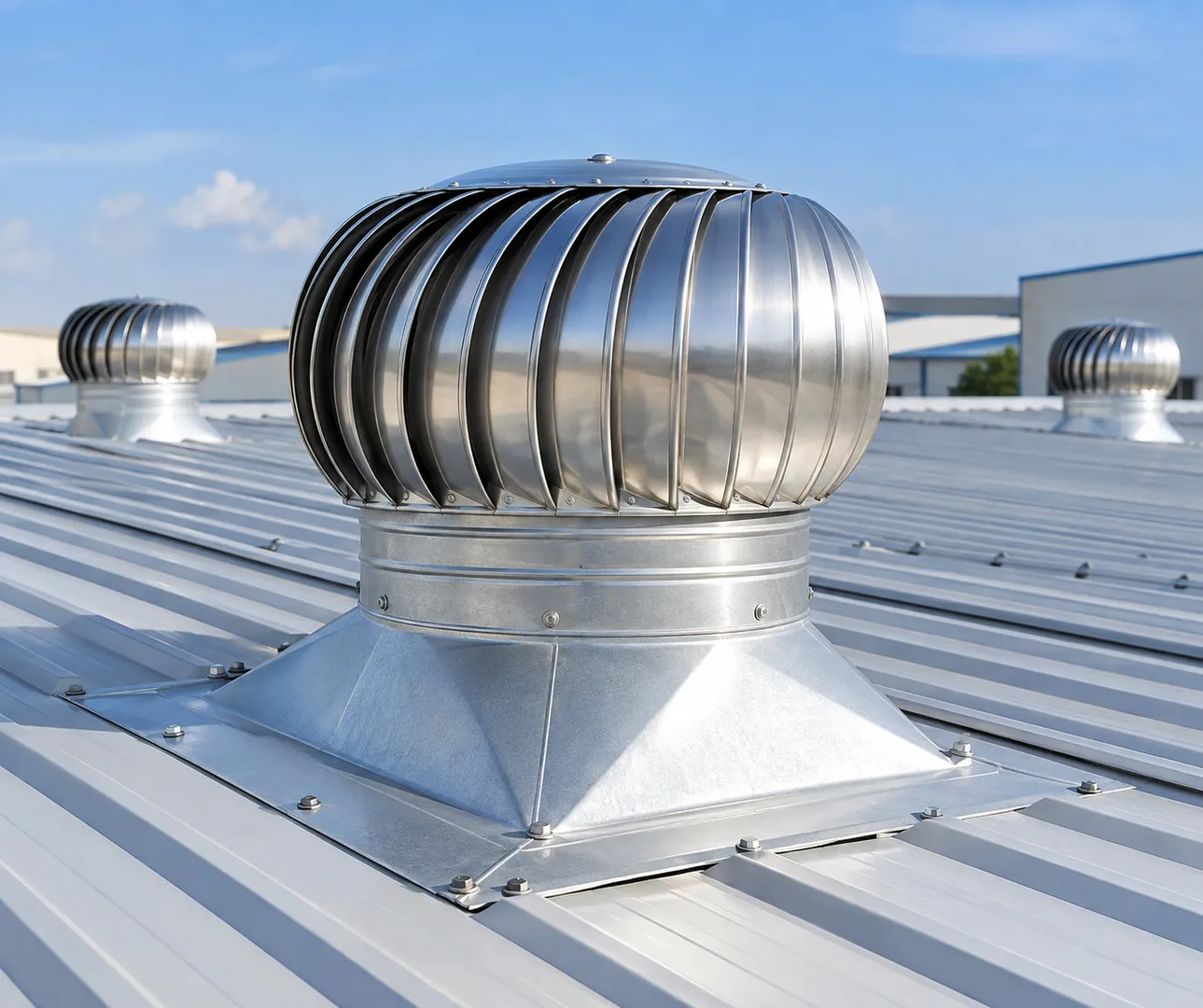
A turbo ventilator is installed at roof level, where its rotating turbine uses natural wind movement to assist the extraction of warm air from inside a building.
Warm air naturally tends to rise. As heat accumulates near the roof, the ventilator provides an outlet through which this air can escape. Wind movement around the turbine supports rotation and helps maintain air extraction.
The system is commonly considered for:
- Industrial sheds
- Manufacturing facilities
- Warehouses
- Workshops
- Storage buildings
- Commercial structures
- Fabrication units
- Agricultural buildings
Its effectiveness depends on building conditions rather than turbine size alone.
Why Roof-Level Heat Requires Attention
Metal-roofed industrial buildings can experience substantial heat accumulation, particularly when exposed to strong sunlight.
Machines, lighting, manufacturing processes, stored materials, and human activity can add further internal heat. If warm air has limited escape routes, conditions inside the structure may become uncomfortable.
Roof ventilation can form part of a broader airflow strategy by allowing rising hot air to leave the building.
However, turbo ventilators should not be treated as substitutes for every form of mechanical ventilation. Facilities generating hazardous fumes, controlled-process emissions, or specific indoor air-quality risks may require engineered extraction systems.
Ventilator Quantity Requires Building Assessment
Installing an arbitrary number of turbines can produce disappointing results.
Before deciding quantity, consider:
- Floor area
- Roof height
- Building volume
- Internal heat generation
- Existing openings
- Air-inlet availability
- Roof configuration
- Local wind conditions
- Nature of industrial activity
Air must also be able to enter the building for extraction to function effectively. Doors, louvers, windows, ridge openings, or purpose-designed air inlets may therefore form part of the ventilation plan.
Roofing Compatibility Matters
Turbo ventilators are typically installed through industrial roofing, making installation detailing particularly important.
The roof opening, flashing arrangement, base profile, and sealing need to be compatible with the roofing system. Poor detailing around the ventilator base can increase the possibility of rainwater entry.
This is especially relevant during Maharashtra's monsoon period. A ventilation solution should support airflow without compromising the weather resistance of the roof.
Maintenance Should Remain Part of Planning
Although wind-driven ventilators do not normally require an electrical connection for routine rotation, they should still be inspected periodically.
Checks may include turbine rotation, physical damage, accumulated dirt, base condition, fasteners, flashing, and surrounding roofing.
Buildings in dusty industrial environments may require more frequent inspection.
A Practical Part of Industrial Ventilation Planning
Turbo ventilators can provide a relatively simple method of supporting natural ventilation in suitable industrial buildings. Their value comes from matching the number, size, placement, roof installation, and air-inlet strategy to actual site conditions.
For industrial projects in Nagpur, businesses evaluating roofing components from manufacturers such as Manav Alloys Private Limited can consider turbo ventilators as one element within the overall roofing and ventilation plan.
A building-specific assessment remains important because ventilation requirements can vary considerably between a storage warehouse, fabrication shed, production facility, and commercial structure.
Keywords